
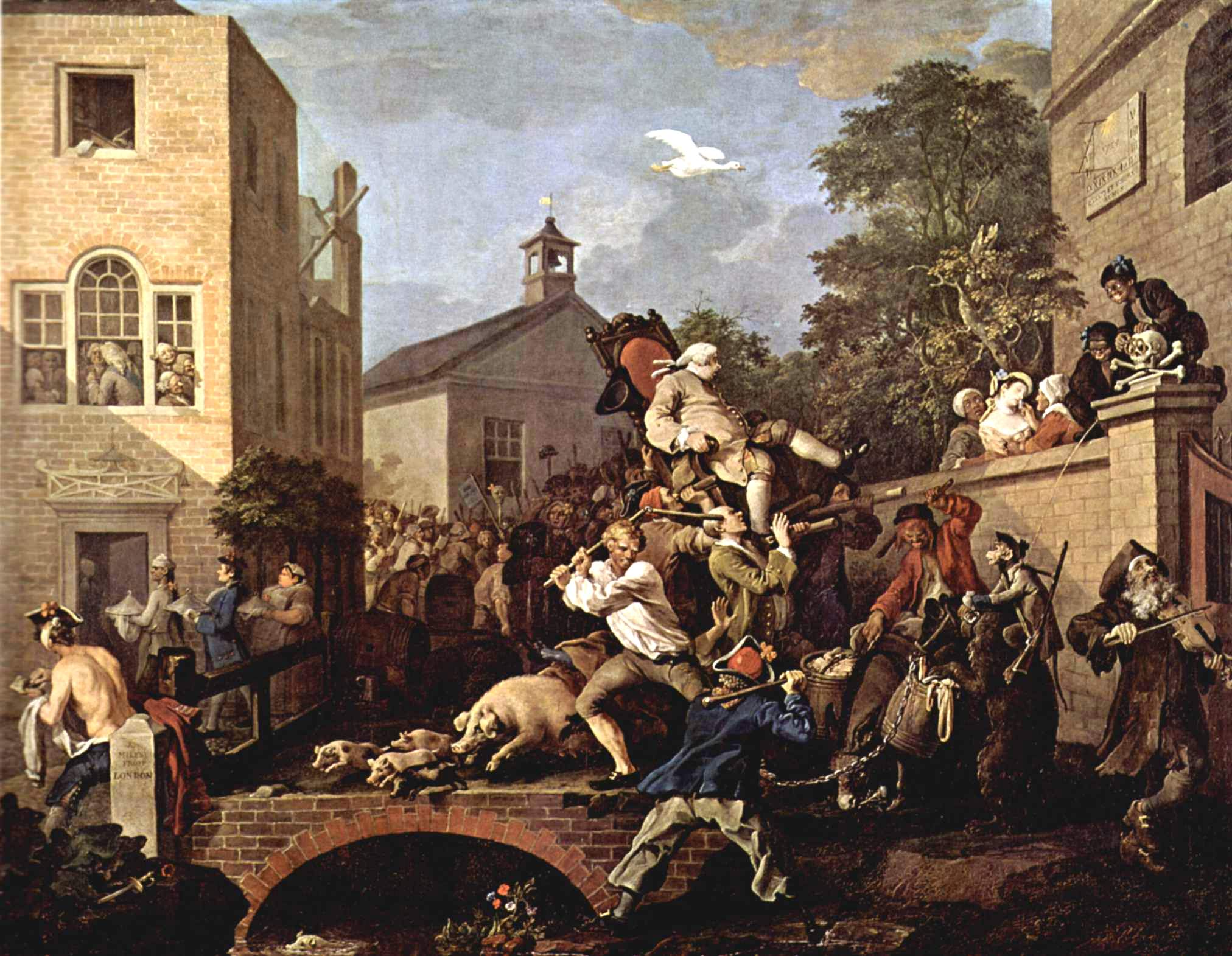
Every election is a filter, and the filter has exactly one setting. It selects for people who want power. Everything else about a candidate varies, their party, their talent, their honesty, but the wanting is constant, because the wanting is the price of entry. We have built our entire system of government on the hope that this appetite is harmless, or at least that it can be domesticated by making the hungry compete with each other.
The people who invented democracy did not share that hope. They considered the wanting to be the problem itself, and they designed their system to route around it.
Classical Athens filled most of its public offices by lottery. Not as a novelty and not as a last resort, but as the beating heart of the system. Magistrates, jurors, the council of five hundred that set the assembly’s agenda, nearly all of them were drawn by lot from the citizen body, using a stone randomization machine called the kleroterion that stood in public view like a piece of civic plumbing. Terms were short, repeats were restricted, and any citizen could expect the wheel to stop at his name eventually.
Elections existed in Athens too, but they were reserved for the few posts where specific expertise could kill people if it was missing, generals mostly. And here is the detail that should rearrange your mental furniture: the Athenians classified elections as an aristocratic device, not a democratic one. Aristotle says it plainly. Choosing officials by lot is democracy. Choosing them by election is oligarchy. An election, to Athenian eyes, was simply a mechanism for handing power to the wealthy, the famous, and the well-connected, which is to say, to the people best equipped to win a popularity contest.
The Five-hundred-year lottery
If Athens feels too ancient to instruct us, Venice ran the experiment into the modern era. From 1268 until Napoleon extinguished the republic in 1797, the Venetians elected their doge through a procedure so baroque it reads like satire. Thirty electors were drawn by lot, reduced by lot to nine, who elected forty, who were reduced by lot to twelve, who elected twenty-five, and so on through ten alternating rounds of chance and choice before anyone cast a final vote.
The design looks insane until you ask what it was for. Every round of lottery shattered whatever campaign, bribe, or faction had formed in the round before. You could not buy the electorate because you could not know who the electorate would be. Ambition had nothing to aim at. The procedure was, in effect, a machine for making the wanting useless, and the republic it protected lasted five centuries, longer than any elected government in history has yet managed.
Ireland put a citizens’ assembly, ninety-nine people drawn by civic lottery, in front of its most radioactive questions, abortion and same-sex marriage, and the assembly’s deliberations paved the road to referendums that professional politicians had swerved around for decades. France handed a randomly selected convention its climate policy. The German-speaking region of Belgium has gone further and made its citizens’ council permanent, a standing body of drawn citizens that sets the agenda for elected officials. These bodies keep producing the same finding, which is that ordinary people, given time, balanced briefings, and no re-election to chase, deliberate rather than perform. They change their minds in public, which is the one thing a candidate can never afford to do.
Meanwhile the elected chambers these assemblies orbit are bleeding legitimacy on every continent. Trust in legislatures sits at historic lows, campaigns cost sums that guarantee dependence on donors, and politics has consolidated into a professional class that increasingly resembles the closed aristocracy Aristotle warned the ballot would produce. The filter is working exactly as designed. That is the complaint.
So the scenario assembles itself. Now imagine what if Somewhere in the 2030s, a country finds itself in a constitutional crisis, unable to trust any elected body to referee its own rules, hands the job to a drawn chamber because the lottery is the only selector no faction controls. If It works, even roughly, remotely but visibly. Others may end up copying it.
By mid-century, What if the sortition chamber might become a normal feature of government, a legislature that statistically resembles the country it governs, containing nurses and drivers and, yes, dental surgeons, none of whom asked to be there, all of whom go home afterward to live under the laws they made. Like the actuality of Rawl’s veil of ignorance.
The Fork
So the question is which way this breaks.
One path is the hybrid. The lot and the ballot divide the labor the way Athens divided it, elections for roles where accountability matters most, lotteries for the radioactive questions no candidate can touch and survive. On this path the briefing problem is treated as the central design challenge rather than a footnote, and the compilers of the pool are watched the way we once watched kings.
The other path is legitimacy theater. The drawn chamber becomes a decorative conscience, wheeled out to bless decisions made elsewhere, its randomness providing the halo while the permanent apparatus provides the outcome. The lottery becomes to the new order what the ballot became to the old one, a ritual that certifies power rather than distributing it.
The Athenians believed the surest way to corrupt an office was to let people compete for it, and they built a machine to keep the hungry away from the table. Twenty-five centuries later, the ballot asks its one eternal question, The lot asks a different and far more uncomfortable one. When the wheel stops at your name, will you take your turn?
Leave a Reply